
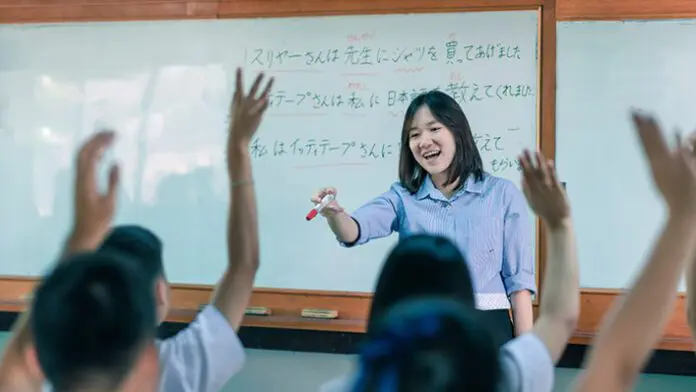
Elementary school: where the crayons are plentiful, and the naps are never long enough. Let’s embark on a whimsical journey through the hallways of Elementary Education in Japan vs. the USA. It’s like comparing apples to sushi – both delightful but oh, so different!
Elementary Education in Japan vs. the USA
Academic Year and Daily Schedule
- United States:Where summer break feels like an eternity…until it’s not. The school year is split into two halves, just like a magician’s assistant, but somehow, everyone comes back together in the fall.
- Academic year: Late August/September to May/June.
- Structure: Two semesters with summer break.
- Daily schedule: Varied start times; extracurricular activities post-school.
- Japan: The academic year starts in April because who wouldn’t want to kick things off with cherry blossoms? They operate on a trimester system, proving that three really is a magic number.
- Academic year: April to March.
- Structure: Trimester system with breaks between terms.
- Daily schedule: Uniform start times nationwide; club activities often after school hours.
Curriculum and Learning Approach
- United States: Where creativity blooms like a science fair volcano. The curriculum is as broad as a cafeteria’s pizza options, encouraging students to think outside the box – even if the box is part of their STEM project.
- Diverse subjects encouraging a well-rounded education.
- Emphasis on fostering creativity, critical thinking, and problem-solving skills.
- Assessment: Regular testing, with significant emphasis on standardized tests.
- Japan: Where discipline meets harmony, and everyone moves in unison like a well-rehearsed school play. Moral education is key, because who said you can’t teach kindness?
- Broad curriculum with added focus on moral education and social harmony.
- Teaching methods often emphasize memorization in early years, with a gradual shift towards analytical thinking in higher grades.
- Assessment: Fewer standardized tests, with a comprehensive evaluation system.
School Lunch and Nutrition
- United States: Enter the world of mystery lunches, where “What is it?” is as common as “Can I have seconds?” It’s a culinary adventure in every tray.
- Varied menus with efforts towards healthier options.
- Nutrition education varies widely among schools.
- Lunch environment: Cafeteria dining is common.
- Japan: Kyushoku is the gourmet chef of school lunches, serving up dishes so balanced, they could be acrobats. Eating in class turns lunchtime into a family-style dining experience – pass the soy sauce, please!
- Kyushoku promotes not only balanced nutrition but also lessons in manners and serving each other.
- Nutrition education is integrated into the curriculum.
- Lunch environment: Eating in classrooms fosters a sense of community.
Extracurricular Activities
- United States: If there’s an interest, there’s a club. From aspiring astronauts to zealous zoologists, there’s room for everyone. It’s like a buffet, but for hobbies.
- Wide range of extracurricular activities, from sports to arts, often outside of school hours.
- Clubs and activities are a significant part of school life but not mandatory.
- Japan: Club activities aren’t just after-school pastimes; they’re commitments as serious as a samurai’s vow. It’s where friendships are forged in the fire of teamwork and occasional dodgeball.
- Club activities are considered an integral part of education, emphasizing teamwork and dedication.
- Participation in clubs is highly encouraged, often leading to long school days.
